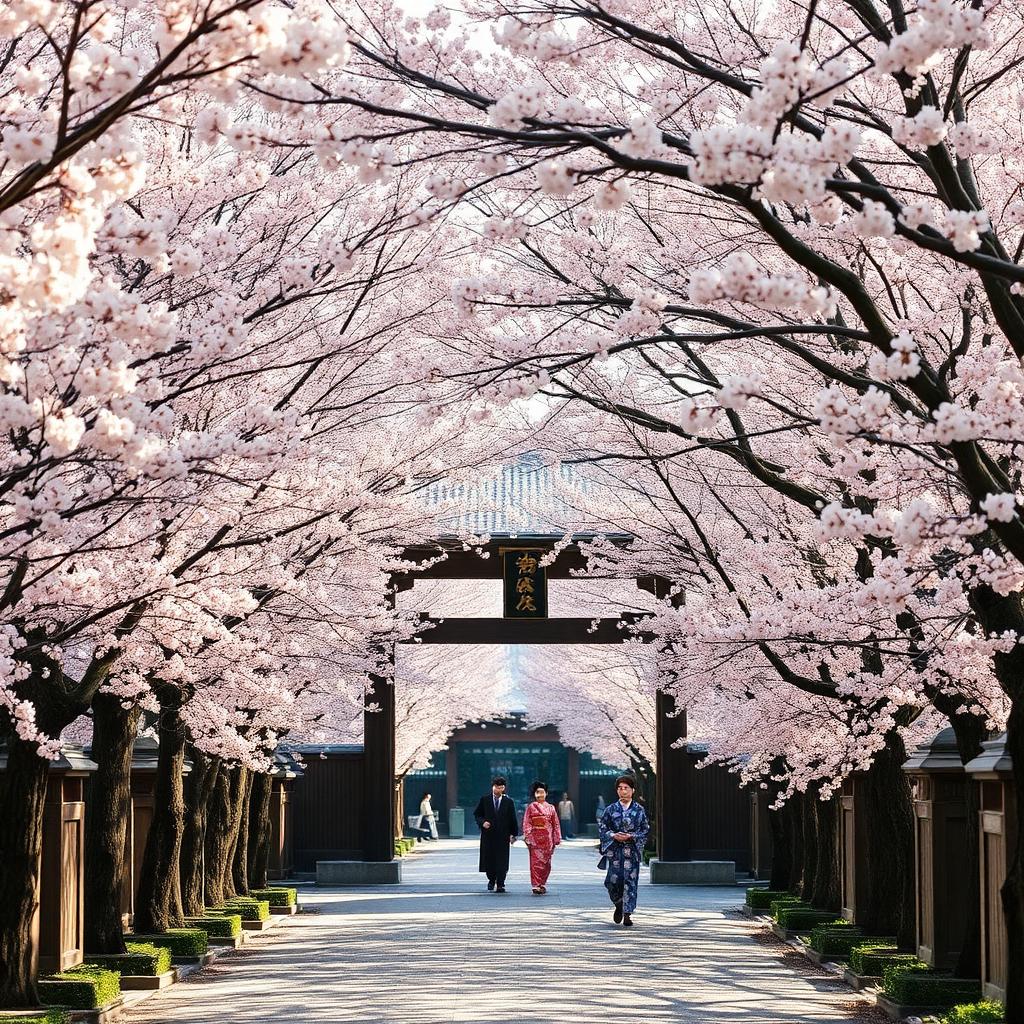
There is a version of Japan that fits on Instagram - cherry blossoms, ramen, neon Tokyo streets, one polite bow at a shrine - and there is the actual country, which is deeper and quieter than the images suggest. This guide is written for someone with 10 to 14 days and a real intention to spend them well: the classic route, the underrated stops, the logistical decisions that separate a great trip from a good one.
When to go
Japan has four genuinely different seasons and choosing among them defines the trip. Spring (late March to mid-April) is cherry blossom season - the country's most photographed period, and also its most crowded and expensive. Book six months ahead. Summer (June-August) is hot, humid, and cheaper; the north (Hokkaido) and mountains (Kamikochi, Kiso Valley) are ideal escapes. Autumn (late October to early December) is the second peak - cool weather, spectacular fall colors, and slightly less crowded than spring. Winter (December-February) is the underrated season: snow monkey country in Nagano, powder skiing in Niseko, quiet temples in Kyoto, warmer beaches in Okinawa.
For a first trip, target the shoulder weeks of early November or the first week of April - you get the peak beauty without the peak crowds and prices. Avoid Golden Week (late April/early May) unless you have a specific reason; the entire country moves and prices double.
The 10-day classic route
For a first Japan trip, the reliable itinerary is Tokyo (4 nights), Hakone (1 night), Kyoto (4 nights), and a day trip to Nara from Kyoto. This covers the essential three-city experience without the burnout of a longer list. Extend to 14 days by adding Hiroshima and Miyajima (2 nights) or Kanazawa (2 nights) at the end. Both are worth it if you have the time. Add Osaka (1-2 nights) only if food is the primary trip motivation.
Do not attempt to add Hokkaido or Okinawa to a first trip; those are their own trips. The temptation to 'see it all' produces itineraries that see nothing well.
Tokyo, without the checklist
Tokyo does not reward the sightseeing-checklist model. It rewards neighborhood immersion. Pick two neighborhoods per day and walk them slowly. The under-appreciated pairs: Yanaka + Nezu (old Tokyo, wooden houses, small temples), Kiyosumi + Kuramae (canals, minimalist coffee shops, small design stores), Shimokitazawa + Yoyogi (vintage, live music, park), Ebisu + Daikanyama (elegant, adult, less crowded than Shibuya). The famous stops - Shibuya crossing, Asakusa's Senso-ji, teamLab, Tokyo Skytree - are worth seeing, but they are the frame, not the picture.
Eat one memorable meal per day and let the rest be spontaneous. Reserve one sushi omakase experience, one ramen you researched, and let convenience-store food (7-Eleven, Lawson) fill the rest - Japan is the only country in the world where convenience-store food is legitimately excellent.
Kyoto, in three registers
Kyoto rewards early mornings. The famous sites (Fushimi Inari, Kinkaku-ji, Arashiyama bamboo grove) are transformed by arriving before 8 am; the same visit at 11 am is a different, worse experience. Structure the day: 6-10 am for the icons, 10 am-2 pm for a neighborhood walk, 2-5 pm for a rest at your ryokan or hotel, and 5-9 pm for a Pontocho or Gion dinner. This is the pattern that makes Kyoto feel like a life episode rather than a tour.
Reserve at least one night at a traditional ryokan. The tatami rooms, the futon bedding, the kaiseki dinner and onsen bath - this is the single most quintessential Japan experience and it does not translate to hotels. Ryokans book out months in advance in peak season; book early.
The transportation calculation
The Japan Rail Pass was recently repriced substantially higher. For a Tokyo-Kyoto-Hiroshima itinerary, the 7-day pass still narrowly wins; for a Tokyo-only or Tokyo-Kyoto-only itinerary, individual Shinkansen tickets are now cheaper. Do the specific math for your itinerary. In Tokyo, get a Suica or Pasmo IC card the moment you land - it works on every metro, bus, and even convenience-store purchase, and eliminates the need to buy individual tickets.
The Shinkansen from Tokyo to Kyoto is 2 hours 15 minutes and departs every 10-15 minutes. Reserve seats on the right side going west for the Mount Fuji view. This is one of the great rail experiences in the world and worth its own line in the trip.
The underrated stops
Beyond the classic three-city route, four stops reward the traveler who has time. Kanazawa (2.5 hours from Tokyo on the Hokuriku Shinkansen) is Kyoto without the crowds: Kenroku-en garden, the samurai and geisha districts, world-class craft shops. Naoshima and Teshima (art islands in the Seto Inland Sea) are a pilgrimage for anyone interested in contemporary art. The Kiso Valley walk from Magome to Tsumago is 8 km of preserved Edo-period road with mountains on both sides. Kamakura, an hour from Tokyo, offers the giant Buddha, hiking trails, and beach - a perfect single-day escape.
The food layer
Japanese food is not one cuisine but dozens, and each city has a specialty. In Tokyo: sushi and ramen. In Kyoto: kaiseki multi-course meals and yudofu (tofu). In Osaka: takoyaki and okonomiyaki. In Hiroshima: a different okonomiyaki (layered, not mixed) and oysters. In Kanazawa: seafood. Do not eat the same category every meal; the country's variety is what makes the trip.
Depachika (department store basement food halls) are the great secret of Japan travel food. Every major train station has one; the food is exceptional and takeaway-friendly. A depachika bento eaten on the Shinkansen is one of the peak Japan experiences.
The small logistics
Get an eSIM (Airalo, Ubigi, Holafly) before you arrive. Cash is still important in Japan - many small restaurants, temples, and shops do not accept cards. Withdraw ¥20,000-30,000 at a 7-Eleven ATM on arrival. Learn to read the katakana script; it takes about two hours and unlocks all foreign-loanword menu items (coffee, pasta, salad). Bring shoes that slip on and off easily; you will remove them multiple times per day.
Book restaurants in advance. Even mid-tier restaurants in Tokyo and Kyoto often require reservations, and walk-ins are commonly refused at nicer places. Use Tabelog for research and, where possible, ask your hotel to make the reservation for you.
The cultural layer
Japan is famously polite and famously specific about small manners. The essentials: bow (a small nod is fine), don't tip, don't eat while walking, keep voices low on public transport, remove shoes when entering homes, ryokans, and some restaurants and temples. Do not point with a single finger. Do not stick chopsticks upright into rice. Do not enter an onsen without washing thoroughly first. These are not tests; they are the frame that makes everything else work. Following them is why the country feels different than anywhere else.
The trip that Japan gives you
Almost every traveler who visits Japan for the first time returns changed in a small, hard-to-articulate way. The care, the quiet, the specificity of every task - from how a shop wraps a book to how a bartender pours a drink - resets your default expectations about what a functioning society can look like. This is the real trip, and it is why Japan tops the return-trip list for most travelers who go.
Real destinations where this applies
- Tokyo - Four nights minimum; neighborhood-immersion pattern beats attraction-checklist pattern.
- Kyoto - Four nights minimum; morning-first pattern is essential.
- Hakone - One night at an onsen ryokan between Tokyo and Kyoto - perfect midpoint reset.
- Kanazawa - Two nights for those with 14 days - the Kyoto experience without the crowds.
Map
Travel tips
- •Book ryokan and top restaurants at least 3 months out.
- •Get a Suica card the moment you land in Tokyo.
- •Ride the Shinkansen from Tokyo to Kyoto on the right side for Fuji.
- •Learn katakana in the two hours before your flight.
- •Eat one depachika bento - you will remember it.
Common mistakes to avoid
- ✕Overpacking the itinerary - trying to add Hokkaido or Okinawa to a first trip.
- ✕Assuming the JR Pass is always cheaper - the 2023 repricing changed this.
- ✕Visiting Fushimi Inari or Kinkaku-ji at 11 am instead of 7 am.
- ✕Booking Golden Week travel without knowing it's the country's most-crowded week.
- ✕Trying to tip - it confuses the recipient and cheapens the interaction.
Frequently asked questions
How much cash should I carry in Japan?+
¥15,000-20,000 per day for most travelers; small temples, small restaurants, and rural areas often refuse cards.
Is English widely spoken in Japan?+
In Tokyo, Kyoto, and tourist zones, enough to navigate. Outside those, less than travelers expect. Google Translate and Google Lens are essential tools.
How many days do I need in Japan?+
10 nights is the practical minimum for the classic Tokyo-Kyoto trip. 14 nights adds Hiroshima or Kanazawa. 21 nights opens up second-tier destinations like Kanazawa, Takayama, and Naoshima.
Is Japan expensive?+
Mid-range now, not the peak-cost destination it once was. Recent yen weakness has made it comparable to Southern European cities on daily cost.
Amelia grew up spending summers in Osaka and has visited Japan more than fifty times. She writes IST World's Japan coverage from Tokyo when she isn't on the road.