The mistake most first-time Italy travelers make is treating it as a single country to be seen in one long circuit - Rome, Florence, Venice, and Cinque Terre in ten days. The result is exhaustion and a blur of half-visited cities. Italy is really twenty regions, each with a distinct food, a distinct dialect, and a distinct pace. The trip that works is the one that picks two or three of them and stays long enough to actually be there.
The north-south split
The most useful frame for Italy is the north-south divide. Northern Italy (Piedmont, Lombardy, Veneto, Liguria, Emilia-Romagna) is faster-paced, more industrial, more Alpine, and food-obsessed in a specific technical way - Bologna, Parma, Modena. Central Italy (Tuscany, Umbria, Lazio, Le Marche) is the classical picture - rolling hills, medieval hill towns, olive groves, and Rome as the anchor. Southern Italy (Campania, Puglia, Sicily, Calabria, Basilicata) is warmer, slower, more Mediterranean, more food-adventurous (Neapolitan pizza, Sicilian arancini, Puglian orecchiette). Pick one region as anchor and one as counterpoint; the trip becomes coherent.
When to go
May, June, and September are the ideal months across most of Italy: warm without being punishing, festivals in full swing, tourist crowds manageable. July and August are hot and crowded - many Italians go on their own vacations, meaning that cities like Rome and Florence half-close while beach destinations like the Amalfi Coast and Puglia become oversubscribed. October is beautiful in central Italy for harvest season. April is unpredictable - some years spectacular, some years wet. November through March is the underrated season: cheaper, fewer tourists, museums empty, but restaurants often on shorter hours.
Rome: eternal, walkable, mismanaged
Rome is the essential Italian city and also the most demanding. Give it four full days minimum. The famous sights (Colosseum, Vatican, Trevi Fountain, Pantheon) are worth every ounce of reputation, but the city is much more than a checklist. Spend one full day just walking - from Trastevere across the Tiber to Campo de' Fiori to the Pantheon to Piazza Navona, stopping for espresso and gelato as needed. This walk is the Rome that no museum can replace.
Reserve the Colosseum, Vatican Museums, and Borghese Gallery online at least two weeks in advance. Same-day tickets are limited, and the lines for those without reservations can burn half a day. Eat at trattorias in Testaccio and Trastevere rather than the tourist strips near the Trevi Fountain; the price gap is 3x and the food gap is even wider.
Tuscany: the region, not the checklist
Tuscany is more than Florence. The city is worth 3 nights - the Duomo, the Uffizi, an afternoon of walking the Oltrarno - but the region needs more. Rent a car and stay two or three nights in a rural agriturismo outside Siena, Montepulciano, or San Gimignano. The days are structured around slow driving through hill country, long lunches at family-run restaurants, and visits to specific vineyards you've researched (Chianti Classico around Radda, Brunello around Montalcino). This is the Italy that produces the most vivid memories.
Book restaurants in the small towns for lunch - one is often enough for the day. Book vineyards in advance; most require appointments and turn away walk-ins.
Venice: the honest version
Venice is often over-hyped and then under-praised as a reaction. The truth is that it is genuinely singular - no other city in the world looks or sounds like it - and it is legitimately overcrowded in July and August. The fix is timing: visit in November through April or in May before the summer crowds. Stay two nights minimum (one night misses the magic of the empty morning before day-trippers arrive). Sleep in Dorsoduro or Castello rather than near San Marco; the neighborhoods are quieter, more residential, and often cheaper.
Wake up at 6:30 am and walk. The city before the crowds is a different place - a working city with vaporetto commuters and shopkeepers opening shutters. By 10 am the tourist wave hits. This is the two-hour Venice that most tourists never see.
The Amalfi Coast and the Sorrento decision
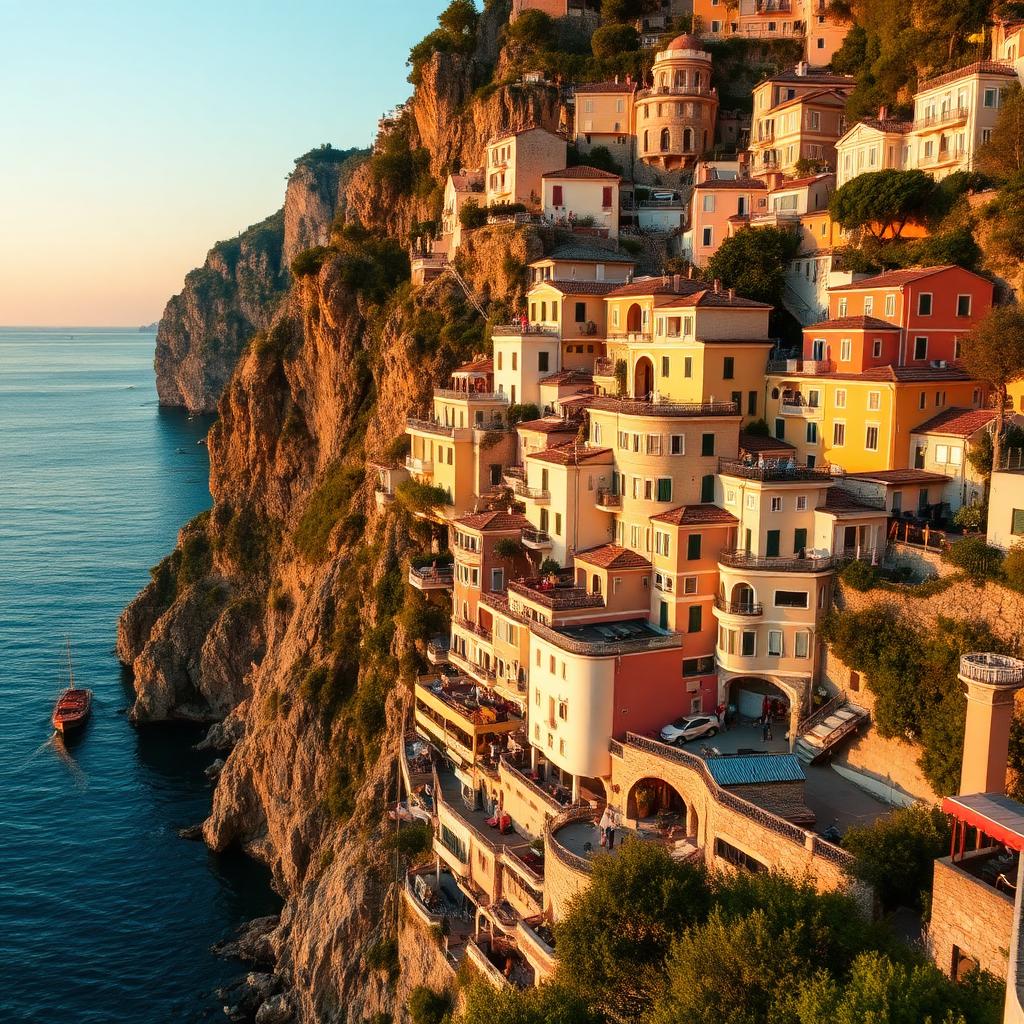
The Amalfi Coast is spectacular and famously expensive in peak season. The critical decision is where to base - Positano is the postcard but the most crowded and expensive, Amalfi is central and slightly more affordable, Ravello is up the hill and quieter, Sorrento is technically not on the coast but is the cheaper, larger, better-connected base for day trips. For a first visit, Sorrento is often the right choice - you get the region without paying the peak Positano premium.
Book Amalfi Coast travel for May, June, or September. July and August turn the coast road into a parking lot and the beaches into a shoulder-to-shoulder scene that few travelers enjoy for more than a day.
Puglia: the current Italian revelation
Puglia is the region getting the most attention right now, and it deserves it. The trulli of Alberobello, the whitewashed towns of Ostuni and Locorotondo, the beaches of the Salento peninsula, and the food (orecchiette, focaccia, fresh mozzarella, everything with tomatoes and olive oil) make it one of the best value-for-experience destinations in Italy. Rent a car and base for four or five nights in a masseria (converted farmhouse). It is warmer, cheaper, and less crowded than the Amalfi Coast, with an equally strong sense of place.
Sicily: the trip's own trip
Sicily is its own country. Ten days minimum. Base in Palermo (2 nights), Cefalu or the Aeolian Islands (1-2 nights), Taormina (2 nights), Syracuse and Noto (2-3 nights), and Agrigento (1 night for the Valley of the Temples). The Norman-Arab-Byzantine architecture, the Greek and Roman ruins, the food that is technically Italian but really its own thing - this is a trip for a second or third Italy visit, or a first Italy trip for someone who wants to skip the standard route.
Food, honestly
Italian food outside Italy is not the same food. The regional discipline is absolute: pasta shapes are specific to their region and rarely appear outside it. Order the local specialty in every city - cacio e pepe and carbonara in Rome, bistecca alla Fiorentina in Florence, orecchiette con cime di rapa in Puglia, arancini and pasta alla Norma in Sicily. Do not order pepperoni pizza (it does not exist in Italy - the word means bell peppers). Do not order a cappuccino after 11 am (Italians drink cappuccino only at breakfast). Do not order pasta at a coastal seafood restaurant if the local specialty is the seafood itself.
The logistical layer
Rent a car in Tuscany, Umbria, Puglia, and Sicily. Do not rent a car in Rome, Venice, or the Amalfi Coast (the first two have no parking, the third has coastal roads that punish inexperienced drivers). Book intercity trains on Trenitalia or Italo; both operate the same routes with similar service, and advance booking saves 30-50%. Get an International Driving Permit before you go - Italy technically requires it and some rental companies enforce it.
The pace that makes it work
Italian pace is slower than the pace most travelers arrive with. Lunches are 90 minutes, not 30. Restaurants do not open before 7:30 pm for dinner. Shops close at 1 pm and reopen at 4. Museums close on Mondays. Once you match this rhythm - long lunch, afternoon rest, evening walk, late dinner - the country stops feeling difficult and starts feeling right. Force the American or German pace and you fight the country for the entire trip.
Real destinations where this applies
- Rome - Four days minimum; walk everywhere; reserve major sites in advance.
- Florence and Tuscany - Three days in Florence, then three in an agriturismo. Rent a car for the countryside.
- Venice - Two nights minimum; sleep in Dorsoduro; wake up early.
- Alberobello, Puglia - The current value destination in Italy; four to five nights in a masseria.
Map
Travel tips
- •Reserve major museums two weeks in advance.
- •Rent a car for rural regions; leave the car for cities.
- •Eat lunch as your main meal; dinner is late and lighter for locals.
- •Order the regional specialty in every city.
- •Never order a cappuccino after 11 am.
Common mistakes to avoid
- ✕Trying to see Rome, Florence, Venice, and Cinque Terre in ten days.
- ✕Renting a car in Rome or the Amalfi Coast.
- ✕Eating at restaurants with menus in five languages posted outside.
- ✕Skipping the afternoon rest.
- ✕Booking Amalfi Coast travel for July or August.
Frequently asked questions
How many days do I need in Italy?+
For a first trip: 10-14 nights. Enough for two or three regions with real depth, not enough for the full-country loop that seems tempting on the map.
Is renting a car worth it in Italy?+
In Tuscany, Umbria, Puglia, and Sicily, yes. In Rome, Florence, or Venice, absolutely not.
What's the underrated Italian region?+
Puglia right now, though it is getting less underrated by the month. Le Marche remains genuinely under-visited by international travelers and has excellent value.
Is Italian food that different in Italy?+
Yes - dramatically. Regional discipline is absolute; ingredients are more seasonal; portions are smaller; wine list is 80% local. It is not a marginal difference.
Elena has lived and reported from Rome for the past six years and has visited every Italian region. She writes IST World's Italy coverage.