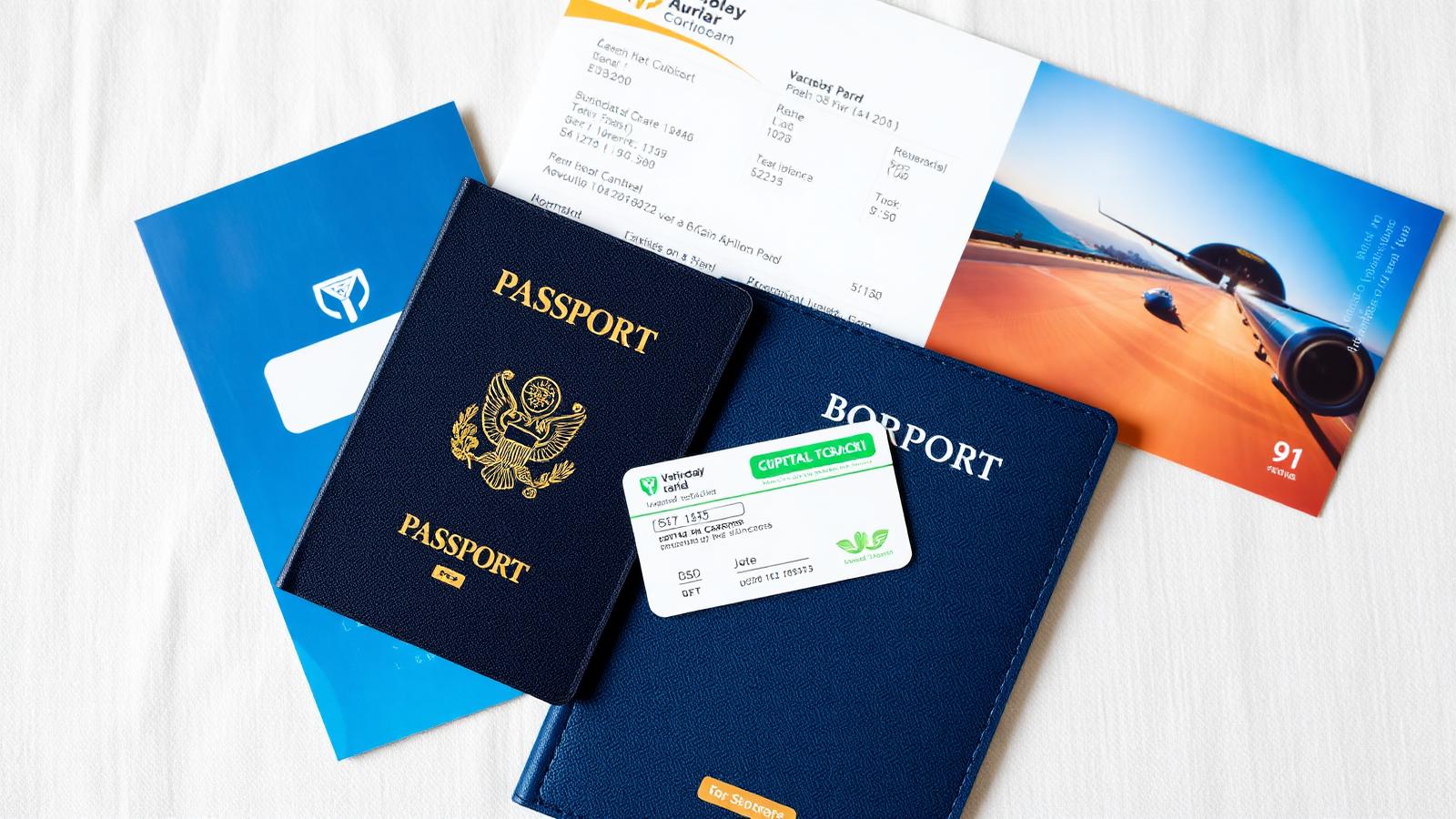
Nothing derails an international trip faster than a passport problem. A passport can be technically valid on paper and still get you denied boarding, refused entry, or held at a border for hours. The rules are not always intuitive, and they vary from country to country in ways that reward reading them once, carefully, before you book anything.
This guide covers the five things every international traveler needs to know: validity rules, blank-page rules, damage and its consequences, renewal timing, and what to do if your passport is lost or stolen abroad.
The six-month rule
The most important single rule in international travel is the six-month validity requirement. Most countries - including all of the Schengen Area, much of Asia, and much of the Middle East - require your passport to be valid for at least six months past the date you plan to leave the country. Not six months past the date you enter. Six months past the date you leave.
This rule is enforced at the check-in counter, not at the destination border. Airlines are fined if they board a passenger who is subsequently denied entry, so they check on your behalf. A traveler whose passport expires within six months of the return date is routinely turned back at the check-in counter, refund policy or not.
Some countries require three months rather than six (Canada, most of South America, and the UK for many traveler classes). A handful require the passport to be valid only for the duration of the stay (Mexico for many nationalities). Never rely on this by memory; check the current entry requirements for your destination the same day you book the ticket.
Blank pages: usually two, sometimes more
Most countries require at least two blank visa pages in your passport for entry - one for the entry stamp, one for the exit stamp. Some countries (South Africa is the famous example) require two blank facing pages, which is more restrictive than it sounds. If your passport has stamps on every page, apply for a new passport before your trip. Sticker-style e-visas and machine-readable stamps still need physical space.
US passport holders can no longer add pages to an existing passport - a full passport requires a full new one. UK, Canadian, and Australian rules vary; check the current process. Give yourself at least three months of lead time for a routine renewal, longer during peak renewal seasons.
Damage is a real category
A passport that appears technically valid can still be considered damaged and refused. Categories that count as damage: water damage that has warped or discolored pages, tears in the cover or spine, a laminate that has lifted from the photo page, ink stains on the personal information page, or any evidence the passport has been altered. A passport is a legal document; its physical integrity is part of its validity.
If your passport is damaged, replace it before you travel. Border officials have wide discretion, and 'the airline let me on' is not a defense at the destination immigration desk.
The children's passport trap
Children's passports expire faster than adults' - five years in the US, five in the UK for under-16s, five in Canada for under-16s. They also often require both parents' consent to renew. Parents who plan a big trip when their child is eleven often discover a passport that expires just before the trip. Check every family member's passport, not just your own.
Renewal timing
In the US, a routine passport renewal by mail takes 6-8 weeks during normal periods and can take 12+ weeks during peak season (spring). Expedited service adds cost and cuts the timeline to about 2-3 weeks. In-person appointments at a Passport Agency are reserved for travel within 14 days and require documented proof of imminent international travel.
UK renewals typically take 3-10 weeks by mail and offer an in-person fast-track option. Canada's rules vary based on where you apply. Australia's average is 6 weeks. Whatever your country: start the renewal process the day you decide to take an international trip within the next year. There is no downside to renewing early; the new passport's expiry date is set from the date it is issued, not from when the old one would have expired.
Lost or stolen passport abroad
If your passport is lost or stolen while you are abroad, do three things in order: report it to the local police and get a report (you will need this for the embassy and insurance), contact your country's nearest embassy or consulate as early as possible, and gather any documentation of your identity you have (a driver's license, a copy of the passport, a birth certificate scan). Most embassies can issue an emergency travel document within one to three business days that will get you home; you cannot use it to continue your original trip.
This is the single strongest argument for keeping a photocopy of your passport separately from the original: a scan on your phone, an emailed copy, and a printed copy in a different bag. Recovery is dramatically faster with proof of who you are.
Second passports and duplicate passports
Frequent international travelers can apply for a second passport in many countries - useful when one passport is being processed for a visa while you need to travel on another. In the US, the second passport is valid for four years rather than ten and requires a documented business or safety reason. Frequent travelers to certain regions may also want a passport free of stamps from politically sensitive origin countries; a second passport is the mechanism for that too.
Enhanced driver's licenses and other alternatives
For US travelers, Enhanced Driver's Licenses (available in Michigan, Minnesota, New York, Vermont, and Washington) can substitute for a passport at land and sea borders with Canada, Mexico, and the Caribbean - but not for air travel and not for anywhere else. NEXUS, Global Entry, and SENTRI membership cards similarly substitute for specific land-border crossings. None of these replace a passport for international air travel.
One habit that solves 90% of passport problems
The single habit that prevents most passport failures: check your passport's expiry date every January. Put it on the calendar. If the passport will expire within a year, renew it. This one recurring reminder eliminates the panicked realization three weeks before departure that a passport is expired, expiring, or too full to travel on.
Real destinations where this applies
- Bangkok, Thailand - Six-month rule strictly enforced; check-in counters routinely turn back travelers.
- Johannesburg, South Africa - Two blank facing pages required - the strictest blank-page rule in wide use.
- London, UK - Three-month rule for many nationalities, plus separate rules for children's passports.
- Mexico City, Mexico - Duration-of-stay rule for many passports - the most flexible major destination.
Map
Travel tips
- •Check your passport expiry every January and renew if within one year.
- •Give yourself at least three months for a routine renewal, six for peak season.
- •Photograph your passport photo page and store it in three places.
- •Confirm the six-month rule for every destination the same day you book.
- •Never travel with a damaged passport - replace it first.
Common mistakes to avoid
- ✕Assuming a technically valid passport is enough - the six-month rule catches thousands of travelers a year.
- ✕Waiting until the trip is booked to check the passport.
- ✕Ignoring children's passport expiry dates.
- ✕Boarding a flight to South Africa without two blank facing pages.
- ✕Not keeping copies of the passport photo page in a separate location.
Frequently asked questions
What if my passport expires four months after my return date?+
For most destinations that enforce the six-month rule, you will be denied boarding. Renew before departure.
Can I travel on an expiring passport if I renew during the trip?+
No. You must have a valid passport when you enter and exit each country. Renewal must be complete before departure.
How long is a passport really valid?+
In practice, ten years minus six months for adults, five years minus six months for children on the six-month rule.
Can I laminate my passport?+
No. A laminated passport is considered altered and can be refused.
Rafael is a former consular officer and IST World's documents editor. He has processed thousands of emergency passports and knows exactly how the paperwork actually works.