International travel demands more paperwork than domestic travel, and the paperwork is more consequential. A missing document that would be a minor inconvenience at home can become a border-crossing failure abroad. The professional approach is to build a complete document folder before departure, carry it in a defined way, and back it up in at least two places - one physical, one digital.
This guide covers every document a serious international traveler should carry: what it is, why it matters, where to keep it, and how to replace it if it goes missing.
The core seven documents
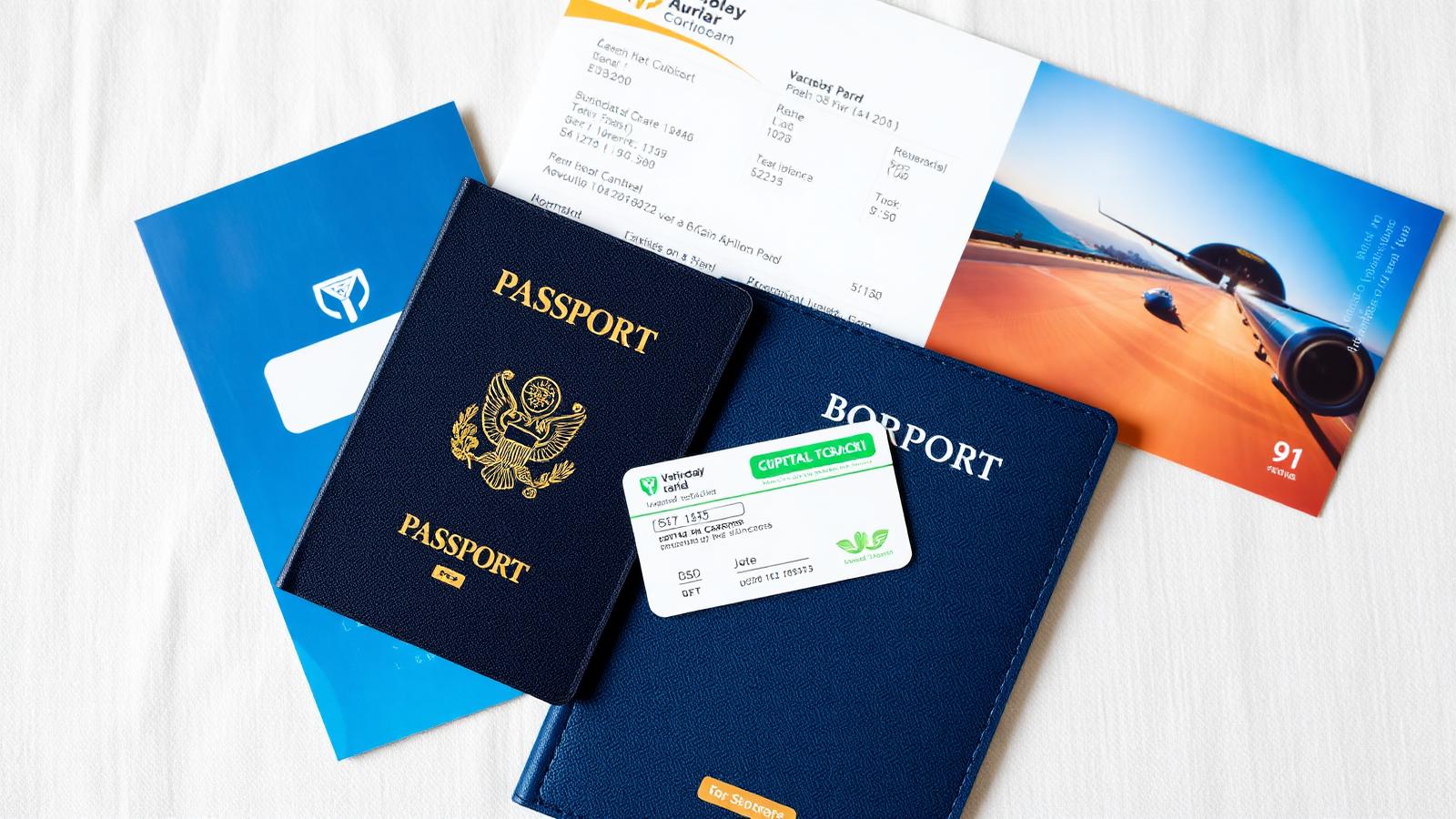
Every international traveler should carry seven core documents: passport, visa or entry authorization (if required), return or onward ticket, proof of accommodation for at least the first night, travel insurance policy summary with 24-hour claims number, a second form of ID (driver's license or national ID), and a printed contact card with local emergency numbers and your home emergency contact. Everything else is optional or specialty; these seven are the floor.
Beyond the core seven, add any documents your specific trip requires: vaccination certificates for destinations that require them, an International Driving Permit if you'll drive, a student ID if you'll use student discounts, medical documentation for prescription medications, and any letters (invitation letters for visas, custody documentation for solo-parent travel with children, corporate letters for business travel).
Passport: the anchor document
The passport is the only document you cannot travel without. Confirm validity, check pages, and confirm the six-month rule. Bring a photocopy of the photo page in a separate bag, and a digital scan in your email. Some travelers laminate the copy; do not laminate the original passport.
Visas and entry authorizations
Every visa, ESTA, ETA, ETIAS, or eVisa should be printed and carried. Digital-only presentation is fine at most borders now, but paper is more reliable when phones die. Confirm the entry document is for the correct passport (mismatches between passport number and authorization number are a common failure mode).
Return tickets and onward travel
Many countries require proof of onward or return travel - evidence you will leave before your allowed stay expires. Airlines enforce this at check-in even when the destination does not. Have a printout or PDF of your return ticket accessible; also have proof of onward travel if the trip is multi-country.
Proof of accommodation
Border officers frequently ask for proof of where you will stay. A confirmation email or PDF for at least the first night is usually enough. For destinations known to require it (Cuba, some Schengen border crossings, entry into China, first-time travelers to Japan), have proof for the whole trip.
Travel insurance policy summary
Carry a printed one-page summary of your travel insurance policy: policy number, coverage limits, 24-hour claims contact, and any pre-authorization requirements. In an emergency, the person helping you may need this before you can talk. Save the same summary as a screenshot on your phone's lock screen for the same reason.
Second form of ID
If your passport is lost or stolen, a driver's license or national ID card dramatically speeds the process of getting an emergency travel document. Carry the second ID separately from the passport - different bag, different pocket. The goal is that no single loss removes both.
Vaccination certificates
Yellow fever certificates are required for entry into many African, South American, and some Asian countries - either as a general requirement or based on the countries you visited in the prior week. The 'yellow card' is the standard document; digital equivalents are increasingly accepted but paper is still safer. Certificates for COVID, typhoid, and other diseases may be required for specific destinations; check the current rules for your itinerary.
International Driving Permit
If you plan to drive internationally, most countries require an International Driving Permit (IDP) in addition to your home driver's license. The IDP is a translation, not a standalone license; it must be carried with the original driver's license. Get the IDP before you travel - it cannot be issued abroad.
Countries that formally require an IDP include Italy, Austria, Japan, Spain, Greece, and Croatia among many others. Enforcement is inconsistent day-to-day but strict when it happens; a car accident abroad without an IDP can void insurance.
Medical documentation
If you take prescription medication, carry: the medication in its original labeled container, the prescription (a physical copy or a photograph), and a letter from your doctor for controlled substances (opioids, ADHD medication, sleep aids). Some countries prohibit medications that are common at home (Adderall in Japan, codeine in the UAE); check the destination's rules.
How to store the document folder
The principle: no single loss removes more than one document. Practically: passport in one bag (preferably worn on the body during transit), backup ID in a different bag, digital copies in email and a cloud folder, and a physical copy of key documents with a trusted person at home. A dedicated document wallet - thin, closable, sized for a passport and boarding passes - is worth its weight.
Replacement paths
If a document is lost, follow the established path. Passport: contact your country's embassy or consulate immediately; carry photo ID and any passport copy. Visa: contact the issuing consulate; some can be reissued from a system, others require reapplication. Insurance: call the 24-hour line; policies can be re-emailed. Credit cards: call issuers; most can wire a replacement card to a hotel within 24-72 hours. The faster the reporting, the shorter the disruption.
One habit that prevents most document failures
The single habit that eliminates most document failures: photograph every document, saved to both cloud storage and a family member's email, on the day before departure. If everything is lost the next day, the recovery still has a starting point. This ten-minute habit is worth more than any expensive luggage tracker or premium travel service.
Real destinations where this applies
- Havana, Cuba - Requires tourist card, proof of insurance, and full accommodation itinerary at entry.
- Nairobi, Kenya - Yellow fever certificate typically required based on preceding travel.
- Tokyo, Japan - Strict rules on certain prescription medications; carry documentation.
- Rome, Italy - IDP formally required for driving; strictly enforced after accidents.
Map
Travel tips
- •Photograph every document the day before departure - cloud plus a trusted contact.
- •Carry the passport and backup ID in different bags.
- •Print the insurance policy summary as one physical page.
- •Get an IDP before you leave; it cannot be issued abroad.
- •Keep prescription medications in labeled containers with paperwork.
Common mistakes to avoid
- ✕Relying on a phone alone for document storage.
- ✕Bringing prescriptions in unlabeled pill organizers to strict destinations.
- ✕Assuming a driver's license is enough - most countries need an IDP.
- ✕Not printing proof of onward travel - check-in counters sometimes refuse purely digital.
- ✕Storing all documents together and losing them together.
Frequently asked questions
Do I really need paper copies in 2026?+
Yes. Phones die, systems fail, and some border officials still insist on paper. One physical printed copy of key documents is cheap insurance.
How do I get an International Driving Permit?+
In most countries, through the national automobile association (AAA in the US, AA in the UK). Cost is small; processing is fast. Get it before departure.
What documents do children need internationally?+
Their own passport, and often a notarized consent letter from the non-traveling parent(s). Requirements vary by country.
Are digital vaccine certificates accepted everywhere?+
Increasingly yes, but paper is still safer. Countries and airlines vary in what they accept.
Rafael is a former consular officer and IST World's documents editor. He has processed thousands of emergency passports and knows exactly how the paperwork actually works.