Check-in is the airport step travelers understand least. The rules are technical, the timings are strict, and the airline's version of 'the truth' at check-in is not always what the booking confirmation said. This guide walks through the mechanics of every check-in path - online, kiosk, and counter - and covers the mistakes that most often cost travelers a boarding pass, a seat, or a flight.
Online check-in: when it opens and why to use it
Online check-in typically opens 24 hours before scheduled departure on most international carriers, though premium cabins on some airlines open earlier (48 hours) and low-cost carriers may open a full week ahead. Use online check-in the moment it opens. It confirms your seat, generates your boarding pass, and - most importantly - signals to the airline that you plan to fly, protecting your reservation against no-show cancellations on some fare classes.
Online check-in is not always available for international flights when your itinerary involves a visa the airline needs to verify or when a checked bag will require in-person tagging. In those cases, you can still often complete online check-in and skip only the bag-drop line, saving substantial time.
Kiosk check-in: fast when it works
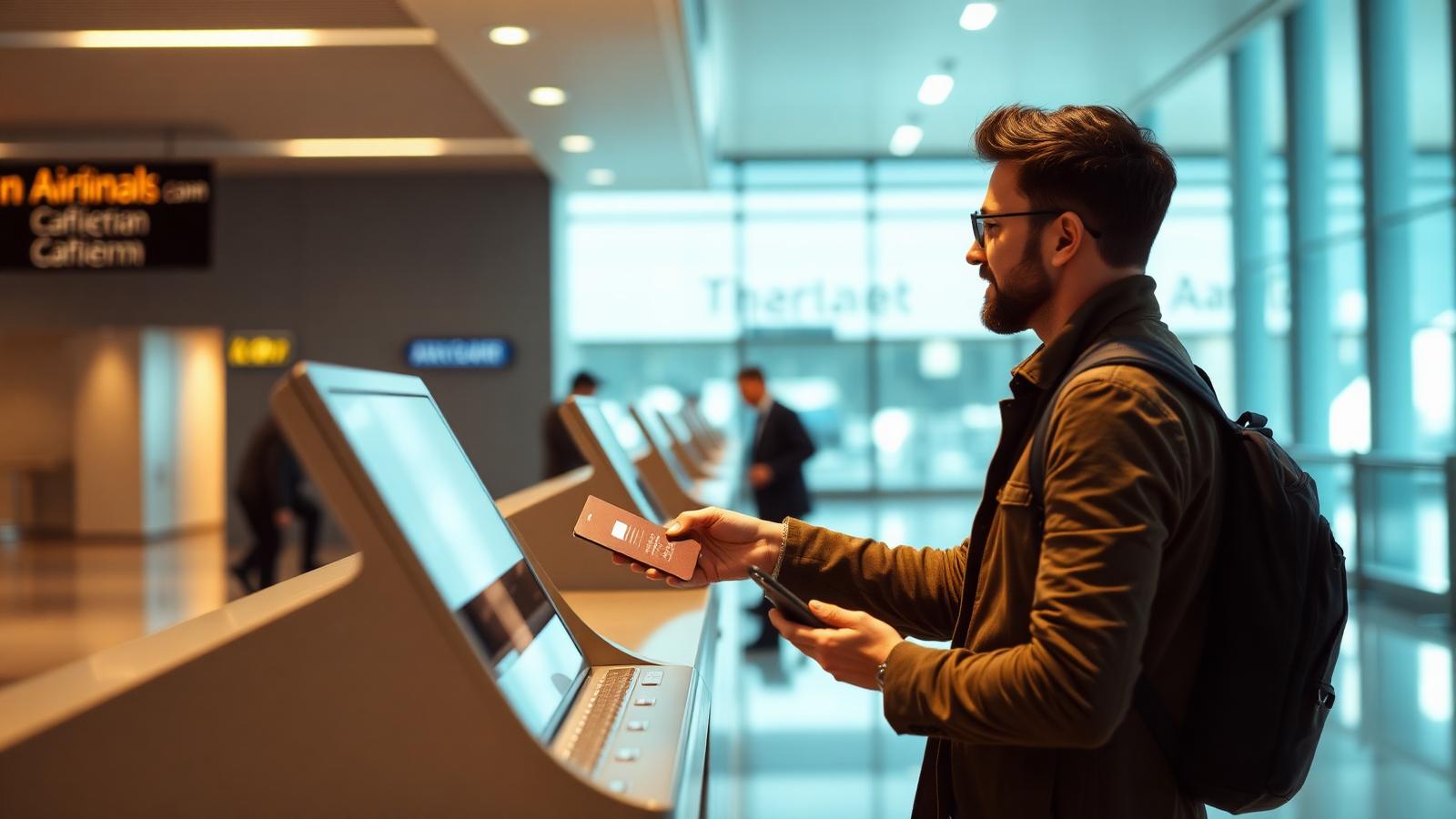
Airport kiosks are useful for travelers who have not checked in online and are traveling with the airline that owns the kiosk. Scan your passport, confirm your reservation, print or update your boarding pass, tag your checked bags, and drop them at bag drop. The whole process takes three to five minutes when things work correctly.
Kiosks fail in two common ways: the reservation is not visible (usually because it was booked through a third party or code-share partner) or the passport doesn't scan on the first try. If either happens, do not spend more than one attempt at the kiosk - walk to the counter.
Counter check-in: mandatory for some trips
Some categories of traveler must check in at the counter: unaccompanied minors, passengers with pets, passengers with oversized or special baggage (surfboards, skis, musical instruments), passengers on some codeshare flights, passengers whose visa requires manual verification, and passengers changing an existing reservation. Counter lines are the slowest part of the airport - plan for them.
How early to arrive
The standard advice - three hours for international, two for domestic - is a reasonable floor for most travelers but not a ceiling. Adjust based on: airport size and complexity (LAX, LHR, JFK, CDG, and PEK are demanding), whether you're checking bags, whether you have trusted-traveler status, what time of day (5-8 am and 3-7 pm are peak in most airports), and whether the flight is oversold. For a busy international departure with a checked bag and no expedited security, plan on four hours door to door. This is not overkill; it is buying yourself the ability to handle one thing going wrong without becoming a missed flight.
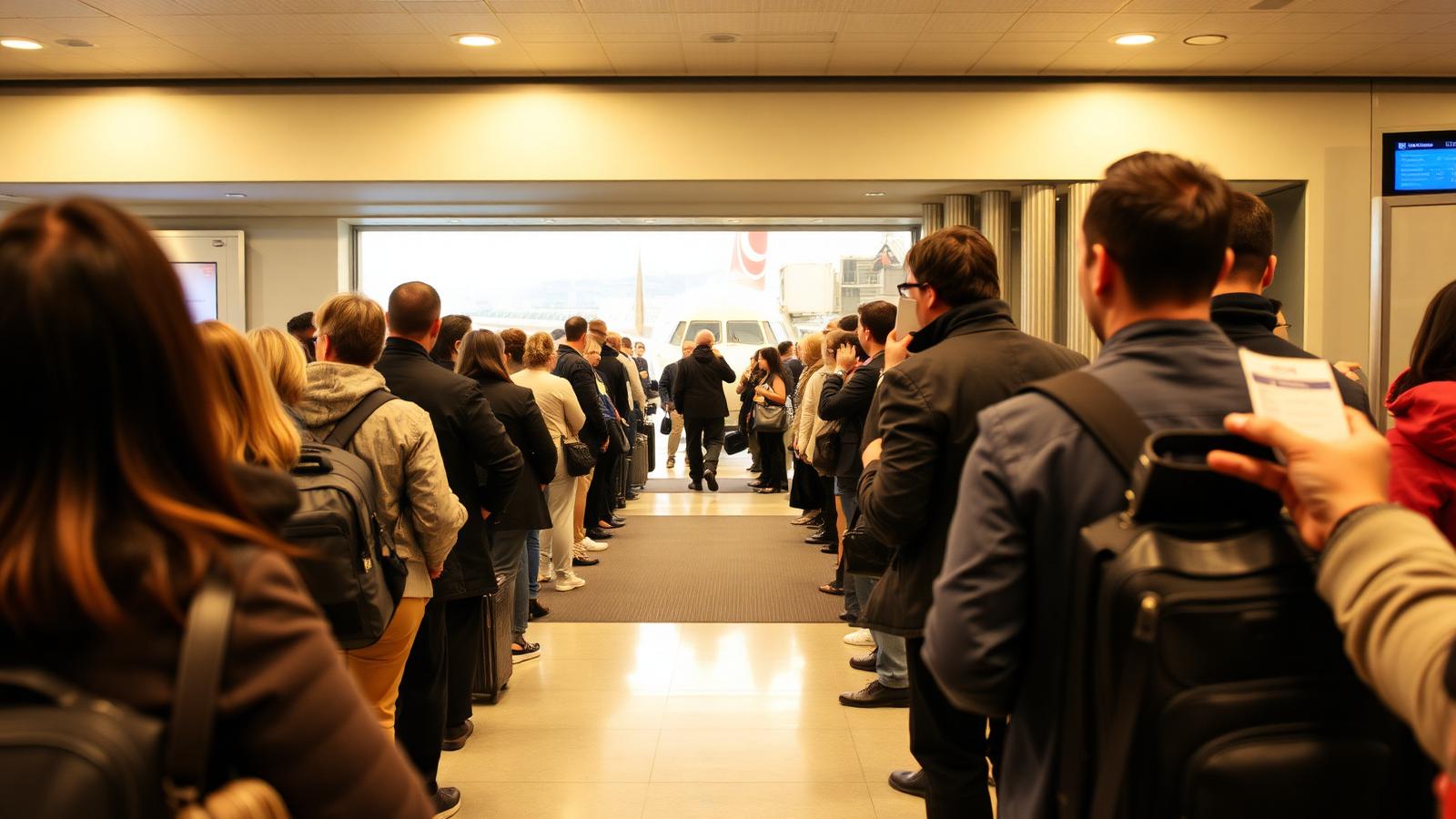
The airline sets a check-in cutoff - usually 60 minutes for international, 45 for domestic. Missing this cutoff is treated as a no-show. Some airlines close the cutoff strictly; others give you a minute or two of grace. Do not test the difference.
Checked baggage rules
Standard checked baggage limits are 23 kg (50 lb) per bag in economy on most international carriers and 32 kg (70 lb) in business, with linear dimensions (length + width + height) usually capped at 158 cm (62 in). Overweight and oversized fees are punishing - often $100 or more per bag per direction. Weigh bags at home; a small luggage scale pays for itself in one trip.
Some routes have piece-based rules (typical for trans-Atlantic from the US), others have weight-based rules (typical for intra-Asia and intra-Africa). Check your specific route.
Carry-on limits
Carry-on limits vary more than checked-bag limits. Most full-service carriers allow one cabin bag (55x35x25 cm typical) plus one personal item (a backpack or purse). Low-cost carriers often charge for a full cabin bag and allow only a personal item free. Read the specific carrier's policy - 'we've always been fine' is a bad strategy on Ryanair, Wizz, or Frontier.
Weight limits on cabin bags exist on many international carriers (usually 7-10 kg) and are enforced inconsistently. Assume they will be enforced on your specific flight.
Special items
Lithium batteries above certain watt-hour ratings must fly in the cabin, not checked. Power banks, spare camera batteries, and e-cigarettes all fall under this rule. Sharp items must go in checked bags. Medications should always fly carry-on. Musical instruments, sports equipment, and fragile items usually require an oversized fee and counter check-in.
The gate check trap
Airlines increasingly gate-check carry-ons when overhead bin space runs out. If this happens, remove valuables, electronics, and medication from the bag before you hand it over. Gate-checked bags are often the last to arrive at the destination baggage claim and occasionally travel on a different flight entirely.
Seat selection
Most airlines now charge for seat selection in economy on international flights. Deciding whether to pay depends on the length of the flight, your height, and the airline. On a 10-hour flight to Asia, paying for an aisle seat is almost always worth it. On a 90-minute European hop, less so.
Free seat selection typically opens at online check-in (24 hours out). If you didn't pay to pre-select, be online at exactly the check-in window to grab the best of what's left.
Common check-in failures
Failures that show up week after week at counters: passport expiring within six months of return, visa or ETA missing or wrong, name on ticket doesn't exactly match passport, no onward ticket for a visa-exempt destination that requires one, checked bag over the weight limit, and unpaid fees on the booking (some airlines add fees post-booking that are due at check-in). Each of these is preventable with a five-minute audit the night before.
One habit that prevents most check-in problems
The single habit that eliminates most check-in problems: online check-in the moment it opens, plus a printed backup boarding pass. Two independent proofs of check-in - the app confirmation and the printed page - give you a fallback for every mechanical failure at the airport.
Real destinations where this applies
- London Heathrow (LHR) - Four hours door-to-door for international in peak season is realistic.
- Tokyo Narita (NRT) - Kiosks and self-bag-drop are excellent - online check-in is the fastest path.
- New York JFK - Terminal-by-terminal variation is huge; confirm your terminal the day before.
- Dubai (DXB) - Some flights offer free home check-in city services; underused by transit travelers.
Map
Travel tips
- •Do online check-in the moment it opens.
- •Weigh checked bags at home with a portable scale.
- •Confirm the departure terminal - some airports split airline operations.
- •Move valuables out of gate-checked carry-ons.
- •Print a backup boarding pass alongside the app version.
Common mistakes to avoid
- ✕Waiting until the last hour to check in online.
- ✕Assuming the carry-on rules that worked on the outbound apply on the return.
- ✕Not weighing bags before leaving home.
- ✕Arriving under three hours before an international flight with a checked bag.
- ✕Ignoring the airline's stated cutoff time.
Frequently asked questions
How early can I check in online?+
24 hours before scheduled departure on most airlines. Some carriers open earlier for premium cabins or elite status.
What if online check-in doesn't work?+
Try once more, then plan to arrive earlier and use the counter. Some destinations require manual visa verification.
Can I still check in if I'm late?+
Once past the airline's cutoff (usually 60 minutes for international), you'll be treated as a no-show. Some agents grant grace; don't count on it.
Do I need to print a boarding pass?+
Not usually - the app is fine. But a printed backup is worth its weight when phones die at the worst moment.
James is a former airline ground operations lead and IST World's airports editor. He has worked hubs from Heathrow to Haneda.