
The list of 'cheap countries' most travelers reference is a decade out of date. Portugal is no longer cheap; Bali is no longer cheap; Prague is no longer cheap. Inflation, tourism growth, and currency shifts have reshaped the map. This guide is not a rehash of a 2015 list. It is the actual budget map of 2026, based on eight months of on-the-ground reporting and a consistent methodology: what does it cost per day for a mid-comfort independent traveler in 2026 dollars, including accommodation, meals, transport, and one paid activity per day?
The methodology
For each destination below, the daily cost assumes: a private double room in a well-reviewed guesthouse or 2-3 star hotel, three meals (two casual, one nicer), local public transport, one paid activity or museum entry, and a modest bar or cafe evening. Everything is 2026 prices, single traveler; couples save roughly 20% by splitting accommodation. This is not backpacker-hostel budget; it is comfortable independent travel.
Under $50/day: the real bargains
Vietnam remains the single best-value destination in the world by this methodology. Hanoi and Ho Chi Minh City both come in at $35-45/day comfortably, and rural areas (Ninh Binh, Hoi An outskirts) are cheaper still. The food scene is genuinely world-class at street-food prices; a bowl of pho for $2 is not a poverty experience but a legitimate dinner. Nepal is comparable at $30-45/day outside trekking; trekking adds guide and permit costs but is still remarkable value. Sri Lanka is $40-55/day, with lower off the tourist trail. Georgia (the country) is $45-55/day in Tbilisi and cheaper in the countryside.
The Balkans are the European entry to this tier. Albania at $40-55/day is the surprise of the decade - beaches on par with Croatia at a third of the price. North Macedonia and Bosnia both come in similar; Kosovo is the cheapest capital in Europe. This tier will not stay this cheap; historically these regions gentrify within 5-10 years of prominent Western tourism appearing.
$50-80/day: the sweet spot
Most of Southeast Asia lives in this tier. Thailand at $55-75/day (Bangkok higher, Chiang Mai lower). Indonesia at $50-70/day outside Bali. The Philippines at $55-70/day. Cambodia at $50-65/day. Laos at $50-65/day. All of these have excellent tourism infrastructure and can be traveled independently with almost no logistical friction.
Latin America's mid-tier lives here too. Mexico (outside Cancun and Tulum) at $55-75/day. Colombia at $50-70/day. Peru at $55-75/day. Bolivia at $45-60/day. Guatemala at $50-65/day. Ecuador and Nicaragua both around $50-65/day. This is the tier where a full month of travel is genuinely affordable for a working professional.
Eastern Europe fills the rest: Romania, Bulgaria, Serbia, Hungary (Budapest higher), Poland (Warsaw and Krakow higher). All in the $55-80/day range for a comfortable independent traveler. Note that these have shifted upward considerably in the last three years due to inflation.
$80-120/day: the previously cheap
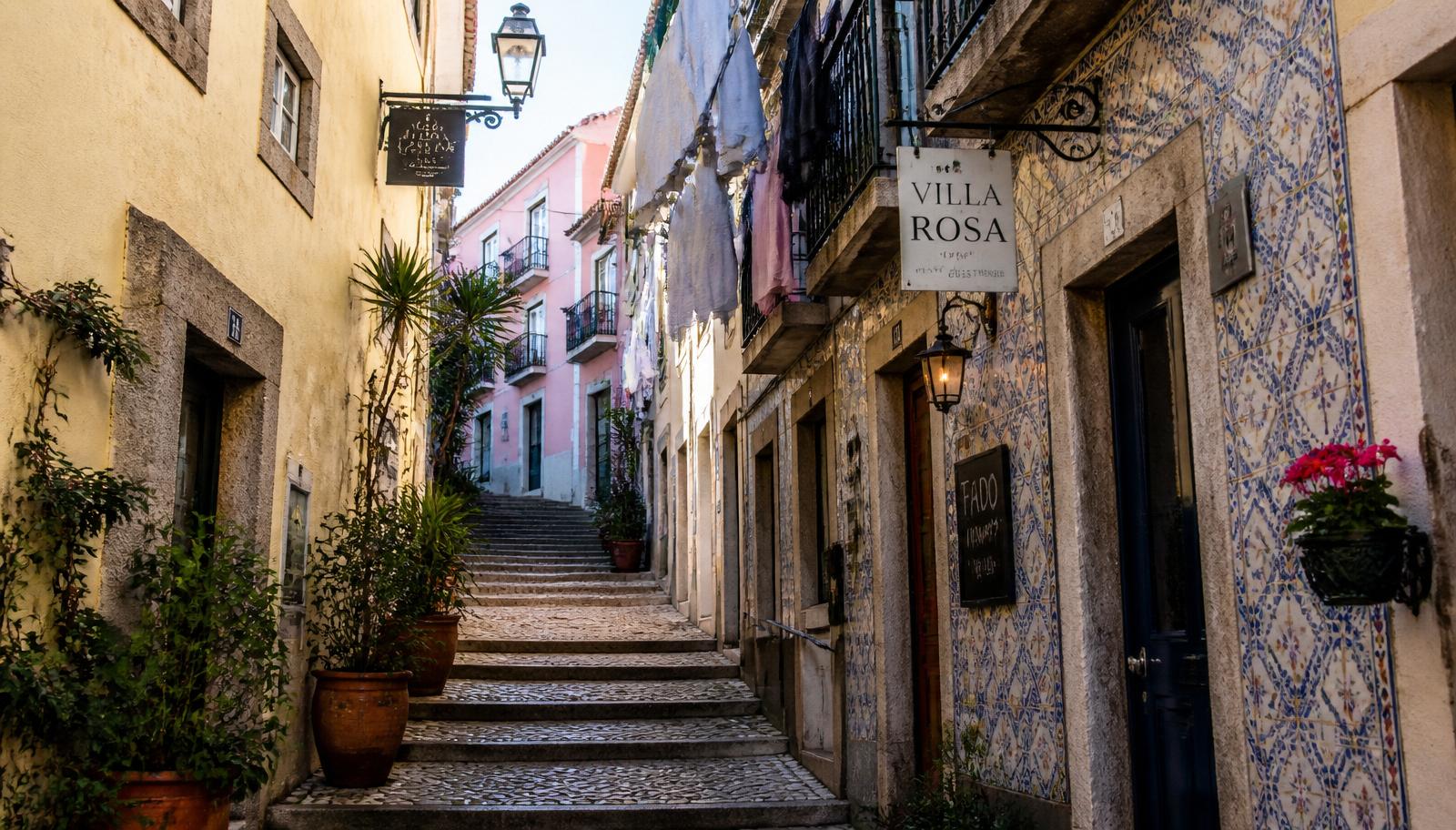
This tier is where the biggest surprises live for travelers who haven't looked recently. Portugal has moved firmly into $90-120/day; Lisbon in particular is now comparable to Barcelona or Madrid. Czechia at $85-110/day for Prague. Turkey at $80-105/day for Istanbul. Greece at $85-120/day depending on island. Spain at $90-130/day for major cities. All of these were substantially cheaper five years ago; travelers arriving with old assumptions are routinely blindsided.
This is also the tier where value travelers should be careful: the difference between $80/day (great value) and $130/day (mid-range Western Europe) is smaller than travelers assume, and choices like Croatia, coastal Portugal, or coastal Spain often close that gap.
$120-200/day: comfort with tradeoffs
France, Germany, Italy, UK, Ireland, Netherlands all cluster here for city travel - $130-180/day for a comfortable independent trip. Japan is $120-170/day, though the recent yen weakness makes this variable. South Korea is $110-160/day. Israel is $130-180/day. Argentina fluctuates wildly with currency but generally $70-130/day for foreigners paying with credit cards under the official rate.
This tier rewards careful accommodation selection and eating mostly outside restaurants. A traveler willing to cook two meals a day at an apartment rental can move a European city from $180/day to $130/day without much loss of experience.
$200+/day: the expensive tier
Switzerland ($220-280/day), Norway ($200-260/day), Iceland ($200-280/day), Singapore ($180-240/day), Australia and New Zealand ($180-250/day), Hong Kong ($180-240/day). None of these are 'bad value' - they deliver exceptional experiences - but budget travel is genuinely difficult without significant compromises (dorm beds, self-catering, avoiding all paid activities). If you have limited days and unlimited destination options, this tier is not the value play.
The specific value pattern to watch
The best-value destinations in 2026 share a set of characteristics: a stable currency, an underdeveloped tourism industry relative to the country's actual attractions, and English-language menu penetration high enough for basic navigation. Currently that describes Albania, Georgia, Uzbekistan, Colombia, Vietnam, and Sri Lanka most acutely. These are the countries where a small budget still buys the trip that Lisbon offered a decade ago.
How to actually reduce daily cost
Within any destination, the four levers that move daily cost most are: accommodation choice (private guesthouse vs boutique hotel is often 3x cheaper for 80% of the experience), local eating (street food and markets are often the best meals AND the cheapest), overnight transport (an overnight bus doubles as a hotel), and self-guided walking versus paid tours (a $2 audio guide often beats a $40 group tour). Pull those four levers and any city gets 30-40% cheaper without changing the shape of the trip.
The airfare arbitrage
Daily cost is only half the budget equation; getting there is the other half. In 2026, the best airfare deals live on Latin America routes ex-Miami, on Southeast Asia routes ex-Los Angeles or San Francisco, on European routes from northeastern US cities (Boston, NYC, DC), and on North Africa and Middle East from most European hubs. Set fare alerts on Google Flights for specific origin-destination pairs 6-9 months out; strike when the fare drops 25% below its 60-day average.
The 'stay longer' rule
The single most underrated budget lever is trip length. Two two-week trips cost roughly double a single four-week trip, because flights and setup costs amortize. If you have flexibility (nomads, sabbatical travelers, retirees), longer trips are almost always higher-value than more, shorter trips. A month in Vietnam at $40/day is $1,200 plus one flight; two two-week trips are $1,200 plus two flights, and the flights often exceed the ground cost.
Closing note
Budget travel is not about deprivation. It is about matching your destination to your budget and then executing well. A perfectly planned $50/day trip in Vietnam is a better travel experience than a poorly planned $200/day trip in Switzerland. Choose the destination against the budget, not the reverse, and the trip becomes possible.
Real destinations where this applies
- Hanoi, Vietnam - $35-45/day; the current best-value serious travel destination in the world.
- Tirana, Albania - $40-55/day; beaches equivalent to Croatia's Dalmatian coast at a fraction of the price.
- Tbilisi, Georgia - $45-55/day; the most underrated capital in Europe for both cost and depth.
- Medellin, Colombia - $50-70/day; perfect climate, growing infrastructure, low cost across the board.
Map
Travel tips
- •Do not use 2015 price lists - the map has moved.
- •Overnight transport doubles as accommodation on the right routes.
- •Guesthouses beat hotels on both price and often experience.
- •Cook two meals a day in Europe to move a city from expensive to mid-tier.
- •Set fare alerts 6-9 months out; strike at 25% below 60-day average.
Common mistakes to avoid
- ✕Assuming Portugal, Czechia, and Bali are still cheap.
- ✕Booking short trips to expensive destinations 'to check the box.'
- ✕Skipping obvious value destinations because they seem unfamiliar.
- ✕Overpaying for tours that duplicate free self-guided experiences.
- ✕Ignoring the flight cost when calculating daily budget.
Frequently asked questions
What's the cheapest country to travel in 2026?+
Vietnam by our methodology, closely followed by Nepal (excluding trekking permits) and Georgia.
Is Portugal still cheap?+
Not compared to five years ago. Coastal Portugal has moved into mid-tier European pricing.
How do I know when a destination is entering a price surge?+
Watch for the rapid opening of chain hotels, English-language coworking spaces, and Michelin-guide listings. All three usually appear within a year of a price surge.
Where do experienced budget travelers go next?+
In 2026, the most-discussed candidates in our community are Uzbekistan, Kyrgyzstan, Guatemala, and inland Albania.
Kwame runs the IST World budget desk and travels roughly nine months a year on a self-imposed $60/day budget. This piece is drawn from field notes taken across 2024 and 2025.